
I've spent most of my life not giving much thought to old age. When I was young it seemed irrelevant, and when I was middle-aged I was too busy. Now that the kids are grown and I have time to reflect, I see old age as a car speeding toward a precipice. Someday, I will go over the edge and plunge to my doom, but until then I'm hoping I can continue to keep my foot pressed down to the floor on the accelerator.
“True terror is to wake up one morning and discover that your high school class is running the country.” — Kurt Vonnegut
My earliest memories of old people involve living a block away from the Firemen's Home in Boonton, New Jersey. Firemen who had no place to live when they got old stayed there. The elderly firemen used to stroll up and down our street for exercise and fresh air. They walked very slowly and smiled at us kids as we ran up and down the street playing noisily. We said hi to them; they said hi back. It never occurred to me to try to talk to them. They were odd-looking creatures—and after all, they were strangers.
I also spent a good part of my childhood visiting nursing homes to call on my grandmother's sister, Aunt Allie. These homes were smelly and filled with people who looked sad or scared. I have images from my childhood of the elderly staring into space as if they had been deserted on a street corner. I suppose, in a sense, they had.
What I didn't appreciate when I was a child was that while the elderly look old, inside they feel the same as anyone else. My 85-year-old mother tells me that sometimes when she looks in the mirror, she's surprised to see someone old staring back. "I feel the same way I did when I was 18," she says.
“It takes a long time to become young.”—Pablo Picasso
We seem to be living in a culture that de-valuates old age. People are always trying to look younger and erase wrinkles. Ironically, some cultures celebrate those wrinkles. According to Chinese face reading, every wrinkle on your face represents a lesson learned. To erase wrinkles is to erase the wisdom that's been gained. Nice thought. I'm tired of seeing commercials on how to erase my aging, as if it were a disease. I'm getting old. Deal with it. If my appearance is too hideous, then avert your eyes.
Cultures around the world have diverse ways of viewing old age, according to e-HeathyAging.com, Pulitzer prize-winning author Professor Jared Diamond and a few other sources:
“Old age is an excellent time for outrage. My goal is to say or do at least one outrageous thing every week.” —Louis Kronenberger
So there are cultures that revere the elderly and consider caring for them an honor; cultures like the United States that consider the elderly unproductive and senile, and shove them away in nursing homes; and cultures that are too poor in food and resources to keep their elderly alive. I guess that puts the future American elderly like me in the mediocre middle. We aren't revered or respected, but we're not being whacked by a family member either.
“True terror is to wake up one morning and discover that your high school class is running the country.” — Kurt Vonnegut
My earliest memories of old people involve living a block away from the Firemen's Home in Boonton, New Jersey. Firemen who had no place to live when they got old stayed there. The elderly firemen used to stroll up and down our street for exercise and fresh air. They walked very slowly and smiled at us kids as we ran up and down the street playing noisily. We said hi to them; they said hi back. It never occurred to me to try to talk to them. They were odd-looking creatures—and after all, they were strangers.
 |
| Great Aunt Allie in the nursing home circa the 1960s. |
What I didn't appreciate when I was a child was that while the elderly look old, inside they feel the same as anyone else. My 85-year-old mother tells me that sometimes when she looks in the mirror, she's surprised to see someone old staring back. "I feel the same way I did when I was 18," she says.
“It takes a long time to become young.”—Pablo Picasso
We seem to be living in a culture that de-valuates old age. People are always trying to look younger and erase wrinkles. Ironically, some cultures celebrate those wrinkles. According to Chinese face reading, every wrinkle on your face represents a lesson learned. To erase wrinkles is to erase the wisdom that's been gained. Nice thought. I'm tired of seeing commercials on how to erase my aging, as if it were a disease. I'm getting old. Deal with it. If my appearance is too hideous, then avert your eyes.
Cultures around the world have diverse ways of viewing old age, according to e-HeathyAging.com, Pulitzer prize-winning author Professor Jared Diamond and a few other sources:
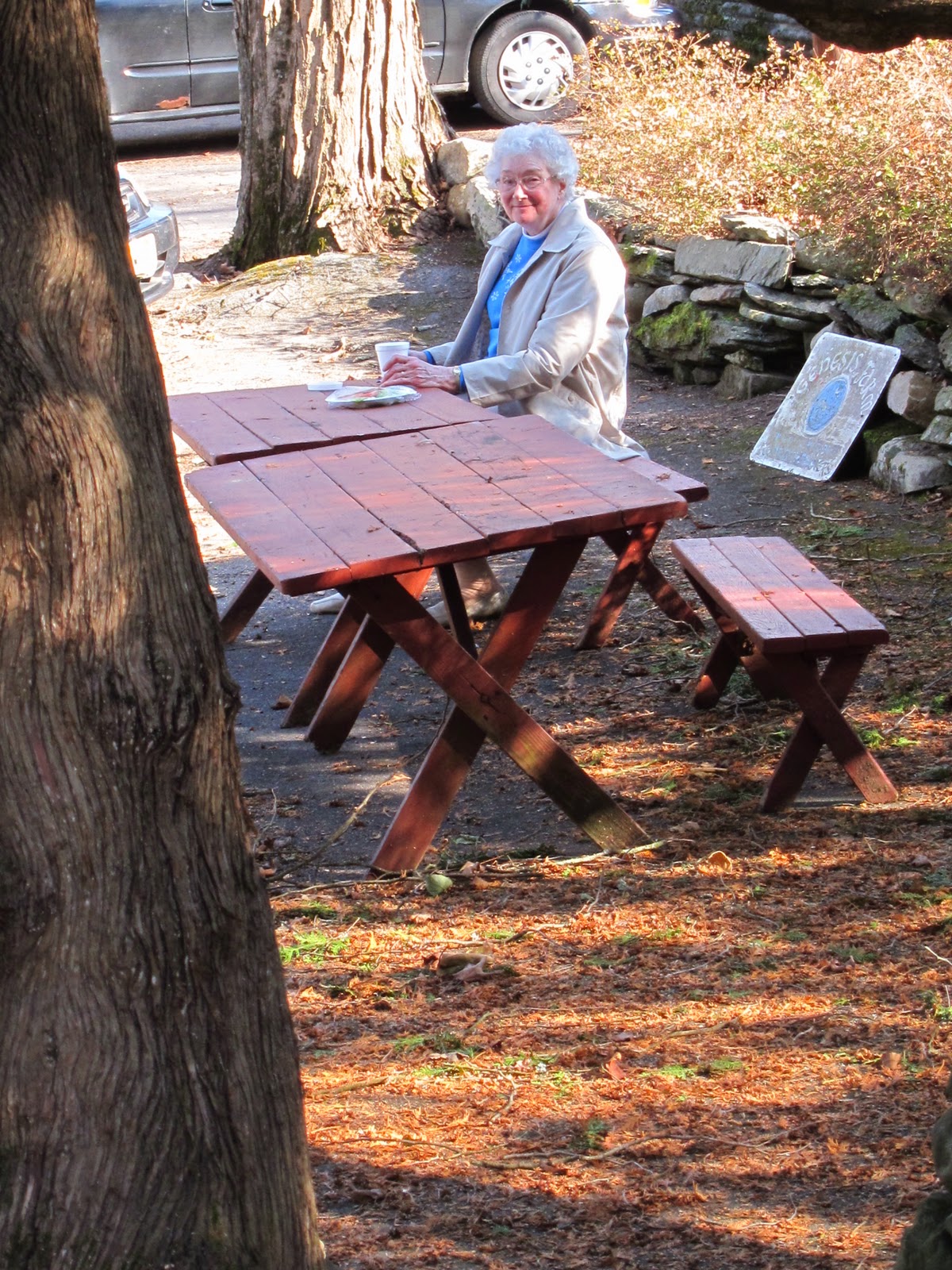 |
| Tenacious G (Grandma) feeling as young as ever. |
- American Indians: They regard their elderly as knowledgeable and their older women as powerful. The grandmother is the heart of the family, and as she ages, the family cares for her in return for her years of devotion.
- Japan: Age is synonymous with wisdom and authority. Older people are the family advisers. The basic unit of Japanese society is the family, and the welfare of the family as a whole is placed above individual members. Elders are the nucleus around which families are built. They are seen as wise, respected, and most importantly, contributing members of society. Children take care of their parents long into their advanced years and consider it an honor.
- East Asia: Cultures steeped in a Confucian tradition place a high value on filial piety, obedience and respect. It is considered utterly despicable not to take care of your elderly parents.
- India: The elderly hold authority, with the right to control the wealth of the family. Matriarchs often run the household. As a sign of respect, Indians have a custom of touching the feet of an older person when they meet. They bow down their heads in front of the elderly as a sign of offering themselves as a vessel of service for the older individual.
- Latin America: The elderly are highly regarded because of their wisdom and inner strength. They are shown a high degree of respect and are cared for by the younger generation when they are no longer able to take care of themselves. This is usually done in the home as opposed to in a facility. Taking care of their elderly is a matter of honor and pride.
- Germany: They see dependence as a very negative quality and invest a lot of time and energy to keep themselves young and healthy. Some studies suggest that Americans consider themselves old at a much younger age than Germans and most of their European counterparts.
- Traditional nomadic tribes: They often abandon their elderly during their travel out of necessity. The healthy and young cannot carry the old and infirm on their backs—along with children, weapons and necessities—through perilous territory.
- Paraguay’s Aché Indians: They assign certain young men the task of killing old people with an ax or spear, or burying them alive. They often experience famine so food can be scarce.
 |
| Old age ain't no box of chocolates! |
So there are cultures that revere the elderly and consider caring for them an honor; cultures like the United States that consider the elderly unproductive and senile, and shove them away in nursing homes; and cultures that are too poor in food and resources to keep their elderly alive. I guess that puts the future American elderly like me in the mediocre middle. We aren't revered or respected, but we're not being whacked by a family member either.
My ambition at this point is to be one of those crazy old ladies who wears a red hat, protests for social justice as a member of the Raging Grannies, and keeps a small posse of cats for company. Like most people, I hope to live life to the fullest until I go over the cliff. In the meantime, I intend to keep my foot firmly pressed on the accelerator—and enjoy the ride.


